


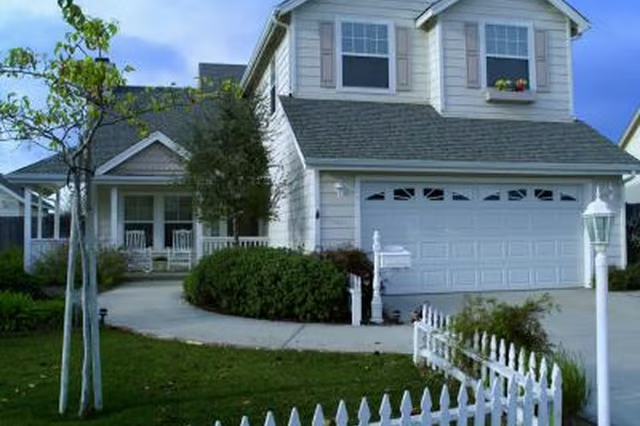
Real estate appraisers and tax assessors both employ the same methods to figure out what your house is worth. Typically, both appraisers and assessors look for recent sales of homes similar to yours: The average sale price indicates your home's fair market value. Don't assume two houses with equal appraised value should have the same taxable value, however -- they often do not.
Real Estate Appraisal
A real estate appraisal is mandatory before you take out or refinance a mortgage. The goal is to set the fair market value of the house: What your property would sell for if both you and the seller want to make a deal, but aren't desperate to do so, and if you're both knowledgeable about the house and the market. The price of comparable homes gives your appraiser a benchmark for determining what price your home would fetch.
Significance
Lenders want your home appraised because it's their collateral for the mortgage loan. If you agree to buy a home for $215,000 and the appraiser says it's only worth $160,000, you're in trouble: If the lender forecloses on the house, it won't sell for enough to cover the mortgage. When fair market value comes in too low for you to get a mortgage, go over the appraisal and look for errors -- if the appraiser wrote down 1,300 square feet instead of 1,800, for example, that would result in the wrong price estimate. So would a comparison to recently sold homes that were in far worse shape than yours, or were located in significantly different neighborhoods.
Tax Appraisal
Tax appraisals -- commonly called tax assessments -- place an estimated value on your home so your county government can determine how big your property tax bill should be. After the assessor does her job, your county may tax you based on your home's fair market value, but the taxable value is set by a combination of state law and the assessor's market estimate, which often results in a lower value estimate. If state law requires the county to set the taxable value of all properties at 40 percent of market value, for example, it will estimate the fair market value, then tax your $200,000 house as if it were worth $80,000.
Surprises
If your neighbor's home is worth $50,000 more than yours, you may think he should pay more in property taxes. In practice, though, different states work so many exemptions and caps into property-tax assessments that taxable value and market value may become very far apart. Florida, for example, doesn't let assessed value rise more than 3 percent a year unless the house is sold. So if you just bought your house, the assessed value and market value will be close; but if your neighbor has lived there 10 years, his property taxes may be much lower than yours, even if the house is currently worth more.
